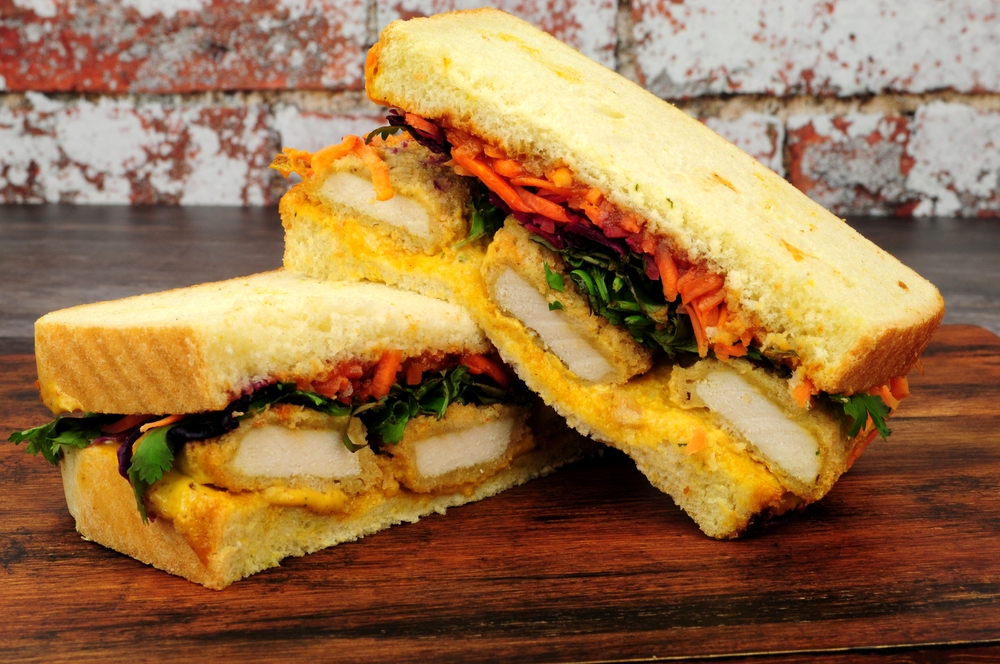
Golden-crisp chicken, tangy cabbage slaw, creamy mayonnaise, and pillowy milk bread come together in this irresistible Chicken Katsu Sando. While the sandwich may look simple at first glance, every layer contributes something special: crunch, tenderness, sweetness, acidity, and rich umami flavor.
Inspired by the beloved Japanese convenience-store classic, this version takes things a step further with juicy marinated chicken thighs and a bright lemony slaw. The result is a sandwich that’s comforting enough for lunch, impressive enough for guests, and satisfying whether served warm straight from the fryer or chilled for a grab-and-go meal.
The secret lies in two key techniques. First, the chicken is marinated in a sweet-savory mixture of mirin, soy sauce, brown sugar, ginger, garlic, and scallions, allowing flavor to penetrate every bite. Second, the breaded chicken is chilled before frying, helping the panko coating adhere better and creating an exceptionally crunchy crust.
Whether you’re discovering katsu sandos for the first time or recreating a favorite Japanese comfort food at home, this recipe delivers restaurant-quality results.
What Is a Katsu Sando?
A katsu sando is a popular Japanese sandwich traditionally made with a breaded and fried pork cutlet tucked between slices of soft milk bread and dressed with tonkatsu sauce and shredded cabbage. Found everywhere from convenience stores to sporting events across Japan, it has become a beloved everyday meal.
This chicken variation swaps pork for juicy chicken thighs while preserving the signature contrast of textures and flavors that makes the sandwich so memorable.
Crispy Chicken Katsu Sandos Everyone Will Crave
Ingredients
For the Chicken Katsu
- 2 large scallions
- 1/4 cup mirin
- 2 tablespoons light brown sugar
- 1/2 cup soy sauce
- 1- inch piece fresh ginger peeled and thinly sliced
- 2 garlic cloves roughly chopped
- 6 boneless skinless chicken thighs (5–6 ounces each)
- 1/2 cup cold water
- 3/4 cup all-purpose flour
- 3 large eggs beaten
- 2 1/2 cups panko breadcrumbs
- Neutral frying oil such as peanut or vegetable oil
For the Cabbage Slaw
- 6 cups finely shaved green cabbage
- 1 1/4 teaspoons kosher salt
- 1 teaspoon granulated sugar
- 2 tablespoons fresh lemon juice
For Assembly
- 6 tablespoons tonkatsu sauce
- 6 tablespoons pickled red ginger strips beni shoga, drained
- 12 slices Japanese milk bread crusts removed
- 9 tablespoons Kewpie mayonnaise
- Reserved sliced scallion greens
Instructions
-
Separate the scallions into white and green portions. Cut the white parts into 2-inch pieces and thinly slice the green parts. Refrigerate the green slices for later.
-
In a small saucepan, bring the mirin to a gentle simmer over medium heat. Cook for 1 minute, then stir in the brown sugar until completely dissolved. Add the soy sauce, ginger, garlic, and scallion whites. Bring the mixture back to a light simmer, then remove from the heat. Allow the marinade to cool and steep for 30 minutes.
-
Butterfly the chicken thighs by carefully slicing through the thicker portions and unfolding them until each thigh has an even thickness. Place the chicken in a large resealable bag. Stir the cold water into the cooled marinade, then strain the liquid directly over the chicken. Discard the solids. Seal the bag, remove excess air, and massage the marinade around the chicken. Refrigerate for at least 3 hours or overnight for maximum flavor.
-
Combine the cabbage, salt, and sugar in a large bowl. Let stand for 20 minutes at room temperature. Add the lemon juice and gently massage the cabbage with your hands until slightly softened. Drain away any excess liquid. Cover and refrigerate until needed. Drain again before assembling the sandwiches.
-
Place flour, beaten eggs, and panko in separate shallow bowls. Remove the chicken from the marinade and discard the remaining liquid. Coat each thigh in flour, then dip into the eggs, allowing excess to drip off. Press firmly into the panko until completely coated. Arrange the breaded chicken on a wire rack set over a baking sheet.
-
Refrigerate the breaded chicken uncovered for at least 30 minutes and up to 12 hours. This important step helps the coating dry slightly, creating an extra-crispy crust while improving breading adhesion during frying.
-
Heat about 3/4 inch of oil in a deep skillet to 325°F (163°C).
-
Working in batches, fry the chicken for 4 to 5 minutes, turning occasionally, until deeply golden brown and cooked through. The internal temperature should reach 165°F (74°C).
-
Transfer the fried chicken to a wire rack and keep warm in a 200°F (93°C) oven while frying the remaining pieces.
-
Top each fried chicken thigh with: 1 tablespoon tonkatsu sauce, 1 tablespoon pickled red ginger, About 1/2 cup cabbage slaw, A sprinkle of sliced, scallion greens
-
Spread approximately 2 teaspoons of Kewpie mayonnaise on one side of each bread slice. Place one dressed chicken thigh on six slices of bread. Top with the remaining bread slices, mayonnaise-side down. Gently press together and serve immediately.
Tips for the Best Chicken Katsu Sandos
- Don’t skip the chilling step. It produces a noticeably crunchier coating.
- Use chicken thighs instead of breasts. They remain juicier and more flavorful after frying.
- Drain the slaw well. Excess moisture can make the bread soggy.
- Use authentic milk bread if possible. Its soft, slightly sweet texture balances the crunchy chicken perfectly.
- Serve immediately for maximum crispness. For a traditional grab-and-go experience, chill and enjoy later.
Suggested Pairing
A crisp Japanese-style beer pairs beautifully with the rich fried chicken and tangy slaw. A red rice ale or a clean lager offers enough body to complement the sandwich without overwhelming its delicate balance of flavors.
Final Thoughts
Chicken Katsu Sandos prove that great sandwiches don’t need complicated ingredients. With crunchy panko-crusted chicken, vibrant cabbage slaw, creamy mayonnaise, and cloud-soft milk bread, every bite delivers a perfect harmony of texture and flavor. Whether enjoyed hot from the fryer or packed for later, this Japanese-inspired favorite is destined to become a repeat recipe in your kitchen.