A fried egg can turn an ordinary meal into something special. Put one on avocado toast, a rice bowl, a salad, noodles, or even a slice of toast, and suddenly dinner feels a whole lot more satisfying.
But there’s one frustrating part of making a fried egg: flipping it without sending that beautiful yolk straight into the pan.
If you love crispy edges and a soft, runny center, there’s a surprisingly simple trick that can make flipping eggs much easier. The secret is all about where the yolk sits in the egg white and which direction you flip.
The Trick Is All About the Yolk
Most of the time, when you crack an egg into a pan, the yolk doesn’t land perfectly in the middle. It usually settles slightly toward one side.
Instead of trying to correct that, use it to your advantage.
When you’re ready to flip the egg, turn it toward the side where the yolk is sitting. This gives the yolk a shorter distance to travel, which means less movement and a lower chance of accidentally breaking it.
Think of it as taking the easy route rather than making the yolk travel across the entire egg.
How to Flip an Egg Without Breaking the Yolk
1. Start With a Nonstick Pan
Heat a nonstick skillet over medium heat and add a little butter or cooking oil. A pan with plenty of open space around the egg can also make flipping easier, especially if you’re still getting comfortable with the technique.
You don’t need the pan blazing hot. Moderate heat gives the egg time to cook without making the whites difficult to handle.
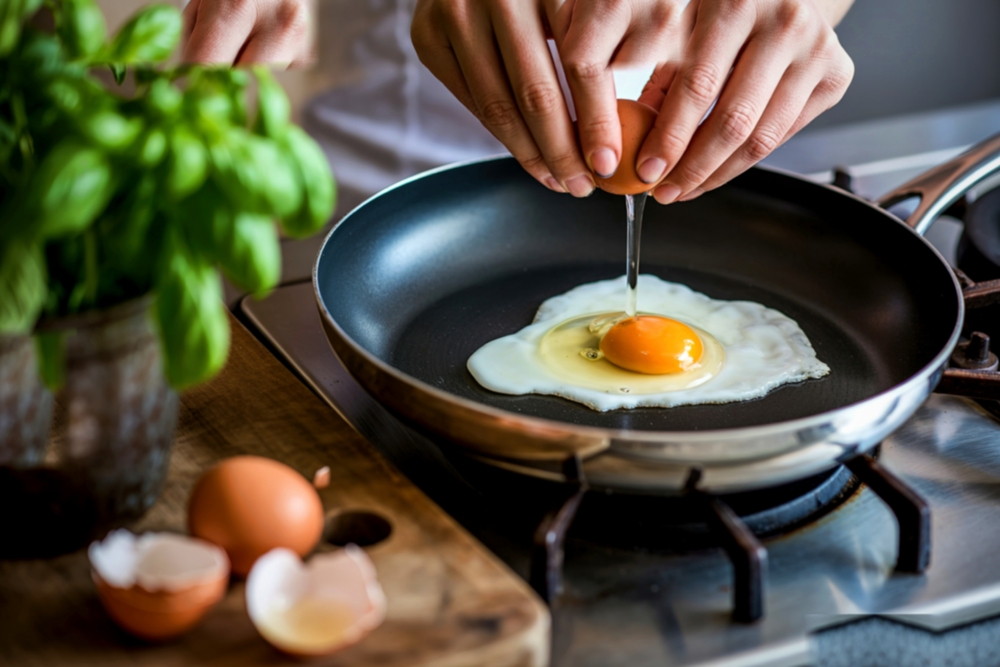
2. Crack the Egg Into the Pan
For an easier, cleaner result, you can crack the egg into a small bowl first and then slide it into the skillet. This also makes it easier to remove any stray shell pieces.
If you’re comfortable cracking eggs directly into the pan, place the egg near the center of the skillet.
3. Find the Yolk Right Away
This is the important part.
As soon as the egg hits the pan, take a quick look at where the yolk has settled. If it’s already toward one side, leave it alone.
If the yolk happens to be almost perfectly centered, you can gently encourage it toward one side while the egg is still very loose. The goal isn’t to move it far—just enough to create a natural direction for your flip.
Once the egg begins cooking, the yolk will become much harder to reposition without damaging the egg.
4. Let the Bottom Set
Allow the egg to cook until the whites are mostly set and the bottom has reached the texture you want.
If you love crispy fried eggs, give the edges enough time to develop some golden, crunchy bits. Season with salt and pepper while it cooks if you like.
For a runny yolk, avoid cooking the egg for too long before flipping.
5. Flip Toward the Yolk
Now comes the moment that usually makes people nervous.
Slide a thin spatula underneath the egg, making sure it gets well underneath rather than lifting only one edge.
Then gently turn the egg in the direction of the yolk.
Rather than lifting the egg high into the air and quickly turning it over, think of the movement as gently rolling or turning it onto its other side. Keeping the egg close to the skillet minimizes the distance the yolk has to travel.
6. Finish Cooking to Your Liking
Once flipped, let the egg cook until the white reaches your preferred texture.
If you want a beautifully runny yolk, you may only need a short amount of time on the second side. If you prefer your yolk more set, leave it in the pan a little longer.
Then carefully slide it onto your toast, bowl, salad, or whatever meal needs a little eggy upgrade.
A Few Extra Tips for Better Fried Eggs
Use a thin spatula. A flexible spatula can get underneath the egg more easily without forcing you to lift it excessively.
Don’t rush the first side. If the whites haven’t set enough, the egg can fold or tear when you try to flip it.
Keep the heat moderate. Excessive heat can make the whites crisp too quickly while leaving you with a difficult egg to maneuver.
Give yourself room. A slightly larger skillet gives you more space to slide the spatula underneath and turn the egg comfortably.
Don’t worry about a centered yolk. An off-center yolk isn’t a problem—it can actually make this flipping technique easier.
Why This Little Trick Works
Flipping a fried egg is basically a matter of controlling how far the egg has to travel.
When you flip directly toward the yolk, the yolk doesn’t have to swing across the entire surface of the egg white. The shorter movement puts less stress on the delicate yolk membrane.
It won’t make an egg completely unbreakable, of course. But combined with a good nonstick pan, a thin spatula, moderate heat, and a gentle flipping motion, it can make the process much more forgiving.
The Next Time You Fry an Egg, Look at the Yolk First
You don’t need a fancy gadget or a complicated cooking technique to get a beautifully flipped fried egg.
Just find the yolk, position your spatula underneath the egg, and flip in the yolk’s direction. Once you get used to watching the yolk before the flip, the process becomes much less intimidating.
And when that perfectly golden egg lands on your toast with the yolk still gloriously intact, you’ll wonder why you ever tried flipping it the other way.