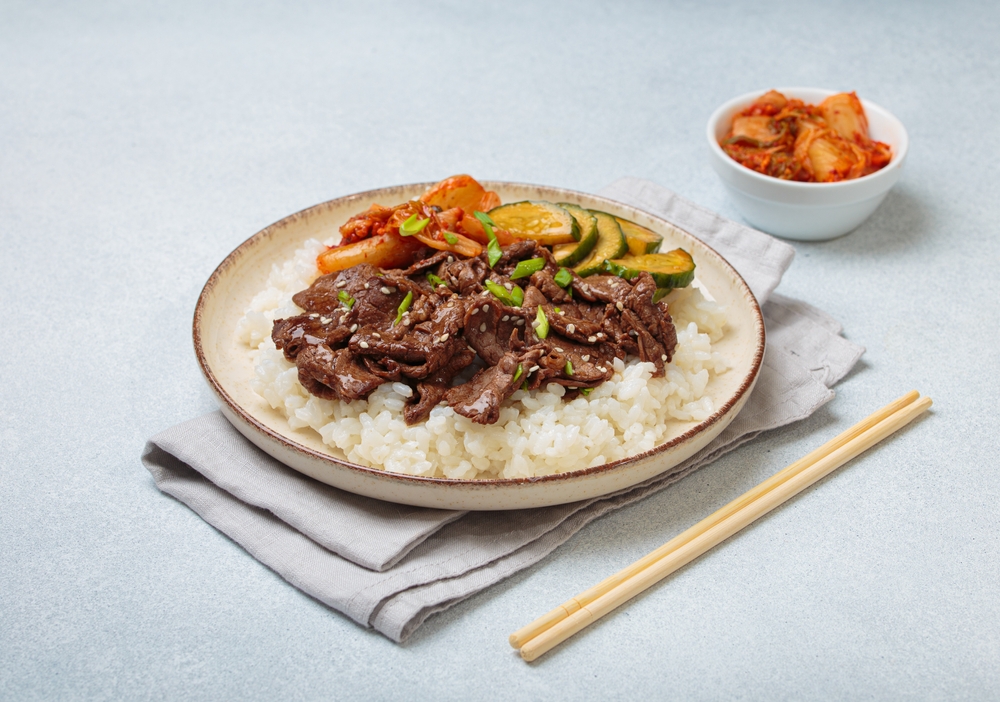
There’s a specific kind of Tuesday-night defeat that hits around 6 p.m., when the fridge looks unpromising and the takeout app feels like the only honest option. This is the recipe that talks you out of ordering. Thinly sliced beef gets a quick soak in a sweet-savory marinade built from soy sauce, brown sugar, sesame oil, and grated pear, then sears fast and hot until the edges caramelize into something a little sticky, a little smoky, and completely addictive. Piled over steaming rice with a scatter of scallions and sesame seeds, it’s the kind of bowl that makes you wonder why you were ever paying delivery fees for something this simple to recreate.
Bulgogi — which translates roughly to “fire meat” — has been a staple of Korean home cooking for generations, traditionally grilled over an open flame. This version trades the grill for a hot skillet, which means it comes together just as fast on a weeknight as it would take to wait for a delivery driver to show up, minus the soggy container and the $6 delivery fee.
Why This Recipe Works
- The marinade does double duty. Grated pear (or a substitute, see notes below) isn’t just for flavor — its natural enzymes gently tenderize the beef, so even a budget-friendly cut turns out fork-tender.
- High heat, short time. Bulgogi wants a screaming-hot pan and just a few minutes of cooking. Crowd the pan and you’ll steam the beef instead of searing it, so this recipe walks you through cooking in batches to get real caramelization.
- It’s endlessly customizable. Swap the protein, add vegetables to the pan, or turn leftovers into fried rice the next day — this recipe is a template as much as it is a single dish.
Korean Bulgogi Beef Bowls
Ingredients
- 1 ½ pounds ribeye or sirloin thinly sliced against the grain (see Tips for an easy slicing trick)
- ⅓ cup low-sodium soy sauce
- 3 tablespoons brown sugar
- 2 tablespoons toasted sesame oil
- 4 garlic cloves grated or minced
- 1 tablespoon fresh ginger grated
- ¼ cup grated Asian pear or substitute, see notes
- 2 tablespoons water
- 1 teaspoon black pepper
- 2 scallions thinly sliced, whites and greens separated
- 1 tablespoon neutral oil for cooking (such as avocado or vegetable oil)
For Serving
- 3 cups cooked short-grain white rice
- 1 cup shredded carrots
- 1 cup thinly sliced cucumber
- 1 tablespoon toasted sesame seeds
- Optional: fried egg kimchi, sriracha mayo, or a drizzle of extra sesame oil
Instructions
-
Slice the beef: If your beef isn't pre-sliced, freeze it for 30 minutes first — it firms up just enough to slice paper-thin against the grain. Thin slices mean fast cooking and a tender bite.
-
Mix the marinad: In a large bowl, whisk together the soy sauce, brown sugar, sesame oil, garlic, ginger, grated pear, water, black pepper, and the white parts of the scallions.
-
Marinate the beef: Add the sliced beef to the marinade and toss to coat every piece. Cover and let it sit for at least 30 minutes at room temperature, or up to 8 hours in the fridge for a deeper flavor. Don't skip this step, but also don't go much longer than 8 hours — the pear's enzymes can start to break the meat down too much and turn it mushy.
-
Heat the pan: Set a large skillet or wok over high heat and add the neutral oil. You want it shimmering and just barely smoking before the beef goes in.
-
Sear in batches: Working in two or three batches so you don't crowd the pan, add the beef in a single layer. Let it sit undisturbed for about 1–2 minutes to develop a caramelized edge, then stir-fry for another 1–2 minutes until just cooked through. Transfer to a plate and repeat with the remaining beef.
-
Build the bowls: Divide the rice among four bowls. Top with the bulgogi beef, shredded carrots, and cucumber. Scatter with sesame seeds and the reserved scallion greens.
-
Finish and serve: Add any optional toppings — a fried egg with a runny yolk is the move here — and serve immediately while the beef is still warm and glossy.
Tips for Success
- No Asian pear? No problem. A grated Bosc or Anjou pear works well, or in a pinch, use 2 tablespoons of unsweetened applesauce or a few tablespoons of grated kiwi. Each brings a similar gentle tenderizing effect.
- Cutting board trick: freezing the beef for 30 minutes before slicing makes it firm enough to shave into thin, even pieces — even with a regular kitchen knife.
- Don’t skip the batches. It’s tempting to dump all the beef in at once, but a crowded pan traps steam and you’ll end up with gray, boiled-looking meat instead of caramelized, restaurant-style bulgogi.
Storage and Reheating
Store leftover beef in an airtight container in the fridge for up to 4 days. Reheat in a hot skillet for a couple of minutes to bring back some of that caramelized edge — the microwave works in a pinch, but the texture won’t be quite as good. The beef also freezes well for up to 2 months; thaw overnight in the fridge before reheating.
Easy Variations
- Low-carb: Swap the rice for steamed cauliflower rice or serve the beef over a bed of shredded lettuce for bulgogi lettuce wraps.
- Extra veggies: Add sliced onions, mushrooms, or bell peppers to the pan during the last minute of cooking.
- Spicy version: Stir a tablespoon of gochujang into the marinade for a spicier, more complex bulgogi.
- Next-day leftovers: Chop any leftover beef and rice together and fry it up with a scrambled egg for quick bulgogi fried rice.